
All on 4
All-on-4 dental implants in Underwood, Logan — a fixed, full arch of teeth supported by just four implants, to replace missing or failing teeth.
What All-on-4 dental implants are
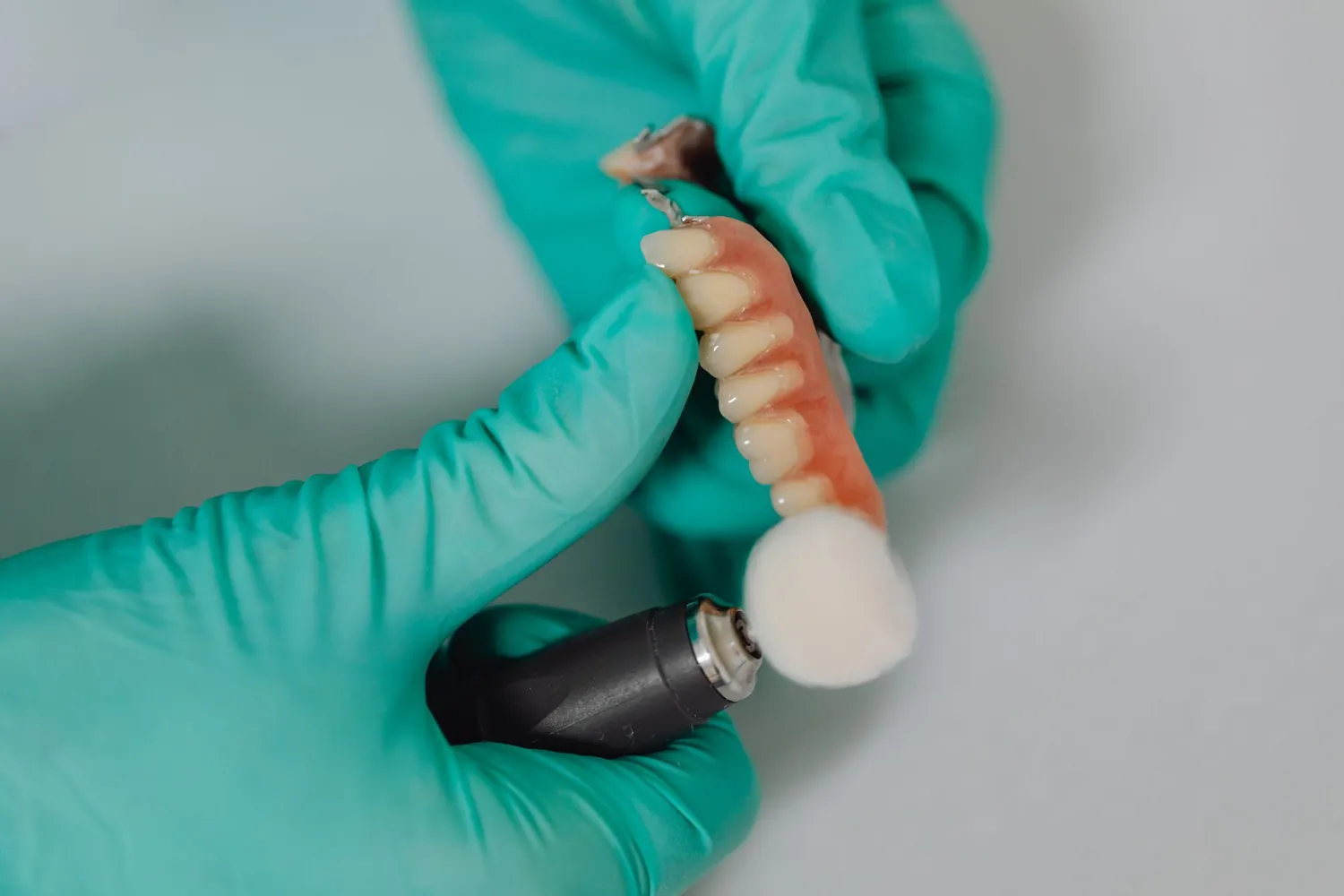
Rather than placing an implant for every single missing tooth, a full arch of replacement teeth is supported by a small number of strategically placed implants — commonly four, which is why this is often called an "All-on-4" solution (some cases use more, sometimes described as All-on-X). A fixed prosthetic arch is then attached to those implants, giving you a full, natural-looking set of teeth that doesn't come out, unlike a denture.
How the All-on-4 implants are arranged
The placement is deliberately angled to make the most of the bone that's available and to avoid sensitive structures like nerves and sinuses:
- Two implants are placed toward the back of each side of the jaw, angled at roughly 30°
- Two implants are placed more vertically near the front of the jaw
- Together, this creates a secure, stable foundation for the full prosthetic arch — and often avoids the need for a bone graft that a straight, vertical placement might otherwise require
A minimally invasive approach
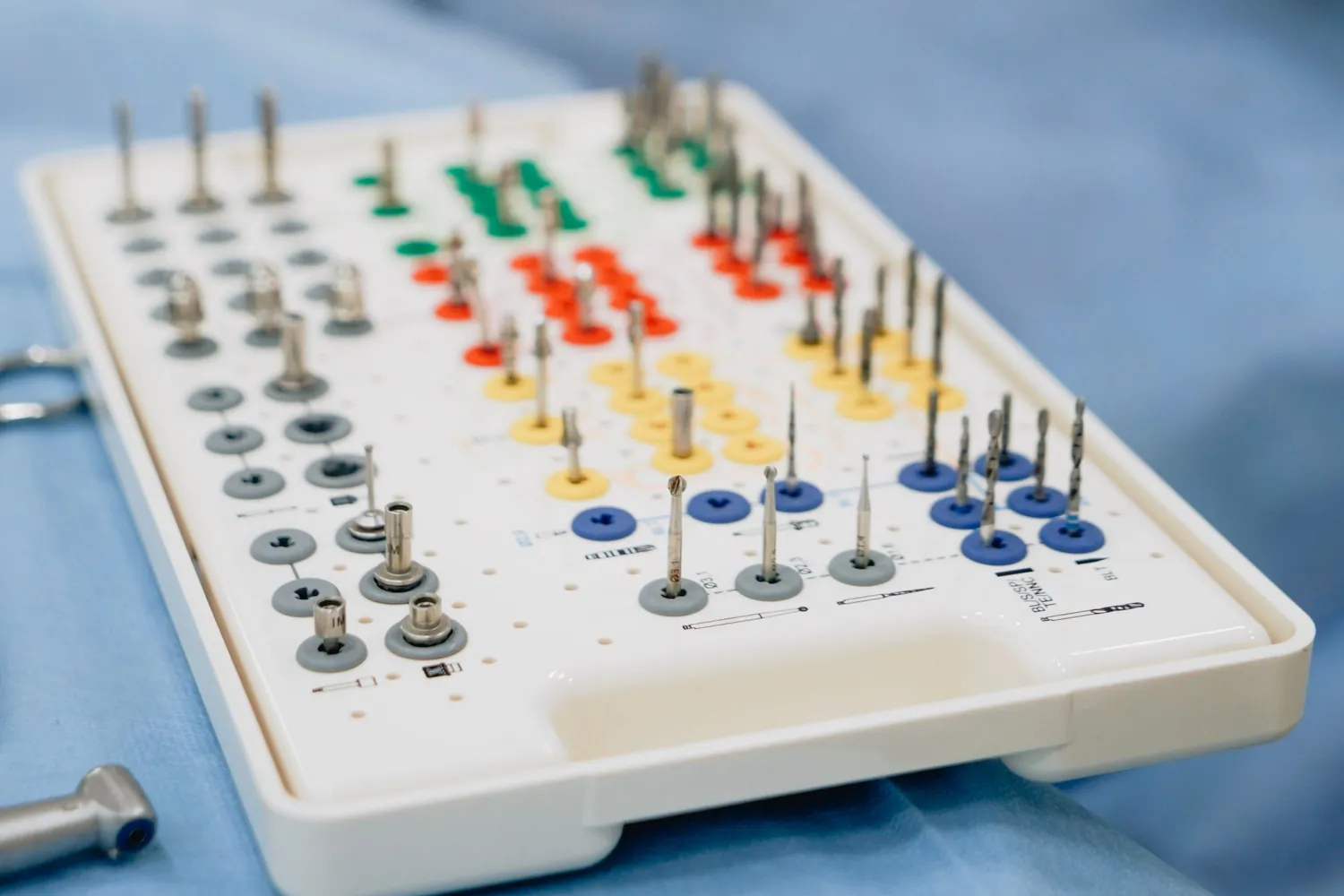
Replacing a whole arch with one implant per tooth would mean many more surgical sites, more healing and often bone grafting. All-on-4 uses just four implants, and angling the back two lets them anchor in denser bone further forward — so treatment is usually completed in a single surgery, with less time in the chair and a quicker recovery.
Your implant positions are planned digitally from X-rays and 3D scans before the day, so placement is precise and predictable. If you're anxious about surgery, IV sedation is available so you can stay relaxed throughout.
Same-day teeth: the "one-day smile"
In suitable cases, a temporary fixed bridge can be attached to the implants on the same day as surgery — meaning you leave with a functioning, good-looking set of teeth rather than going without while you heal. The final, permanent restoration is fitted once the implants have fully integrated with the bone, typically after a few months.
All-on-4 vs traditional dentures
- Clearer speech and full taste — there's no plate covering the roof of your mouth, so words come out naturally and food tastes the way it should
- Fixed in place — no clipping in and out, no slipping while eating or speaking
- Stronger bite force — chew the foods you actually want to eat, much closer to natural teeth
- Preserves jawbone — the implants stimulate the bone the way natural tooth roots do, which traditional dentures don't
- Natural appearance — designed to mimic the look of real teeth, which helps confidence as much as function
Longevity
All-on-4 and other full-arch implant restorations are built for extended durability — with good care, a lifespan of 15 years or longer is realistic, compared to around five years for a traditional denture before it typically needs relining or replacing.
 All-on-4 restorations
Precision-made implant restorations
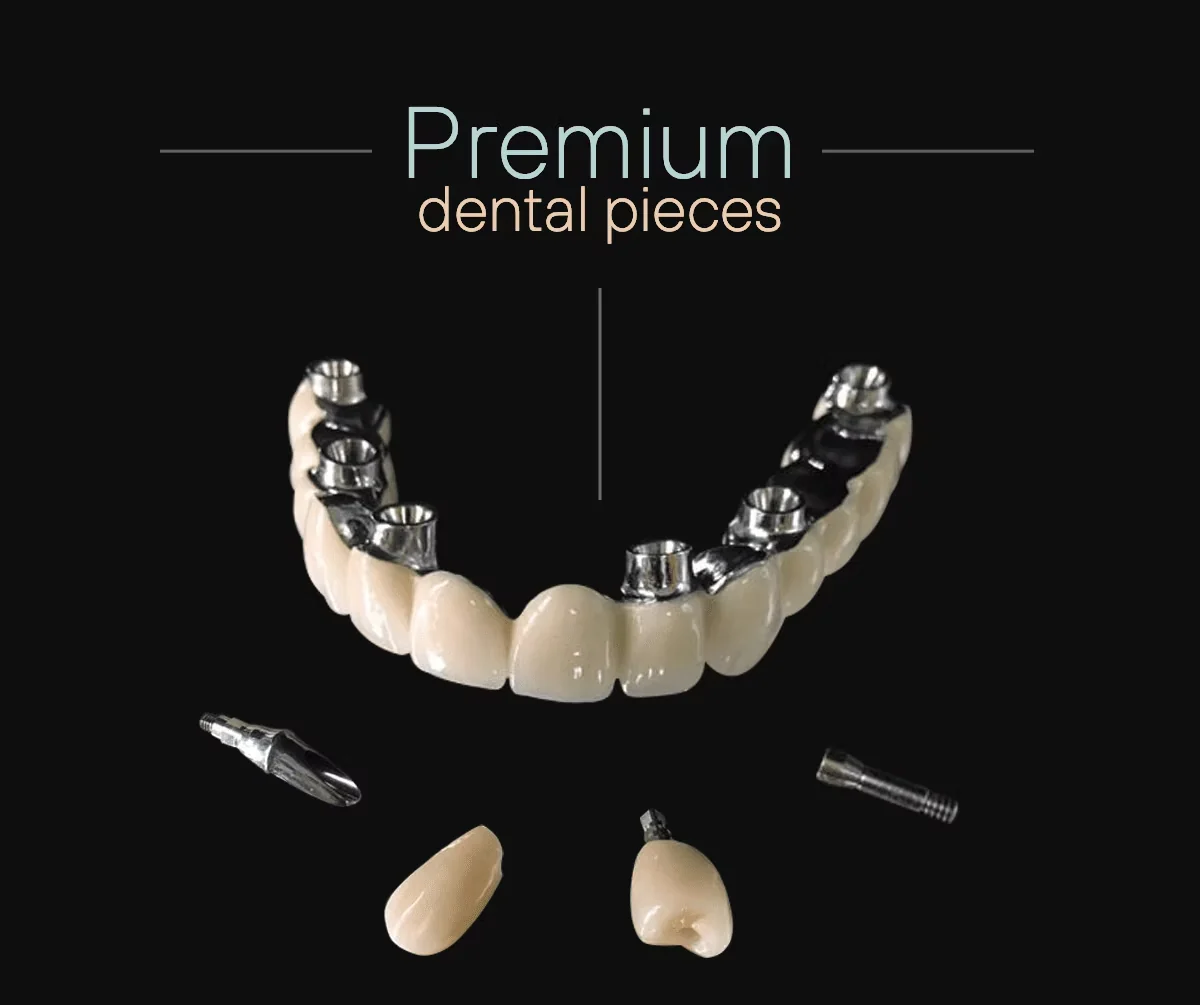
Your new teeth are only as good as the parts underneath them. Every All-on-4 bridge is custom-made by a dental laboratory to fit your implants, your bite and your smile.
- Titanium implants — biocompatible posts that fuse with your jawbone
- Precision abutments — the connectors that join your implants to your new teeth
- Custom-made teeth — shaped and shaded to suit your face, in durable materials such as zirconia or porcelain
Experienced implant dentists
Implant treatment at Dentist at Underwood is led by dentists with advanced training in implant dentistry:
- Dr Raghed Bashour — an Associate Fellow of the American Academy of Implant Dentistry since 2016, with years of experience in implant planning and in coordinating complex treatment under deep sedation and general anaesthesia
- Dr Mustafa Al-Arkee — holds a Master of Clinical Dentistry in Periodontology and Implantology from the Medical University of Vienna, with a special interest in implant placement, bone augmentation and gum health around implants
You'll meet your dentist at your consultation and can ask as many questions as you like before deciding anything. Meet the whole team.
Is All-on-4 right for you?
For a step-by-step look at the whole process, read our All-on-4 patient guide.
This option generally suits people who are missing most or all of the teeth in an arch, or who have multiple failing teeth that make sense to replace as a set rather than one at a time. A thorough assessment of your jawbone and general health is the first step — we'll talk you through whether you're a good candidate, and whether a bone graft is likely to be needed.
Is All on 4 the same as full-arch implants?
All-on-4 (also written All on 4) is one type of full-arch implant treatment, where a complete arch of teeth is fixed to four implants. Some patients need five or six implants instead, often called All-on-X — we'll recommend what suits your jaw after your scans.
How many implants are used?
Typically four per arch, though some cases call for more, depending on bone volume and the specifics of your situation — we'll confirm the right number for you during planning.
Will I be without teeth while it heals?
Not if you're eligible for the same-day fixed temporary bridge — most patients leave the surgery with a functioning set of teeth already in place.
Is it the same as dentures?
No — unlike removable dentures, a full-arch implant solution is fixed in place. It functions much more like natural teeth, with significantly better chewing strength and no risk of slipping.
Will I need a bone graft?
Often not, because the angled implant placement makes efficient use of the bone that's already there — but it does depend on your individual bone volume, which we'll check with imaging beforehand.
How much does All-on-4 cost?
It depends on how many implants you need, whether a bone graft is required and the type of final bridge. We'll give you a clear, itemised quote after your consultation and scans, and we offer interest-free payment plans through TLC and Pretty Penny Finance.
How long does the whole process take?
Planning, placement and healing typically spans several months from start to the final restoration — we'll give you a realistic, personalised timeline at your consultation.